So Close You Can Almost Taste It
May 28, 2023
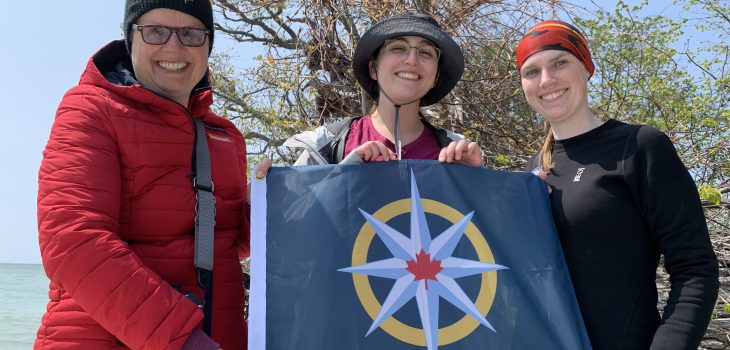
Cover Photo: The OLIVER MOWAT Expedition funded by The Royal Canadian Geographical Society
It is like I am stepping back in time as I pass picturesque farms on the way to the boat launch next to the historic lighthouse at Point Edward. The air is filled with the smell of lilacs which are in full bloom everywhere that I look.
We quickly launched the boat, but it took another hour to review our check lists and load all of our cameras and diving equipment on board.
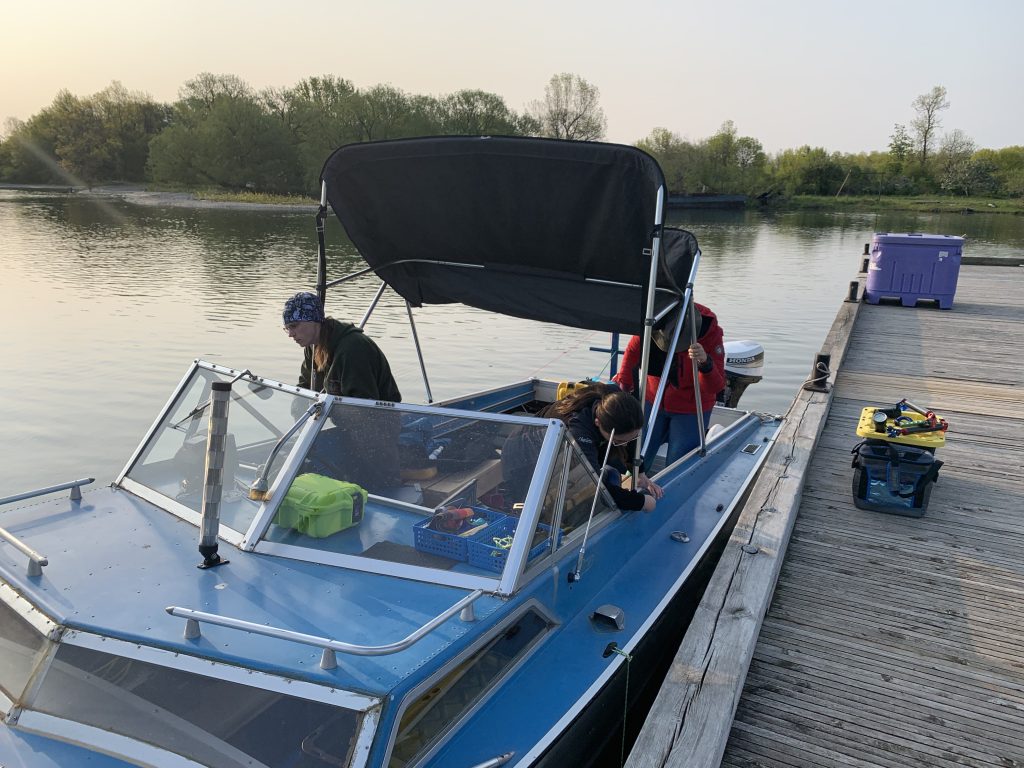
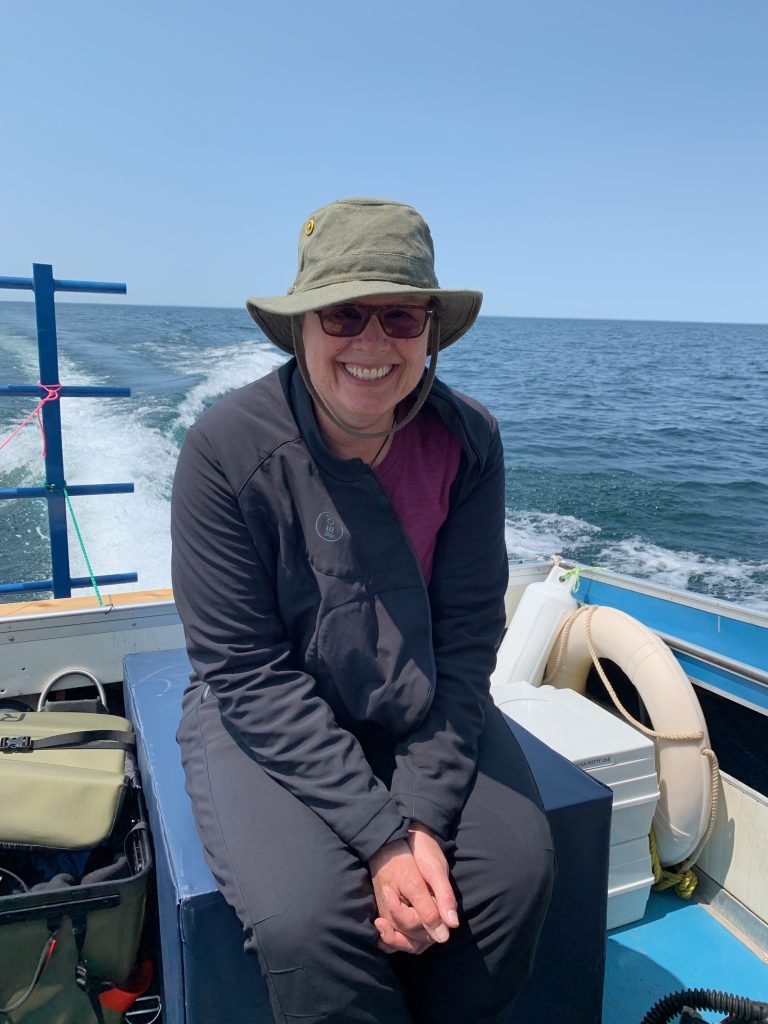
Lying almost fifteen kilometers offshore, the boat ride was expected to take about an hour. The feeling of the sun on my face and the wind in my hair added to the anticipation that had been building for months.
Looking at my teammates beside me, I thought about how fortunate I was to have them onboard this expedition.
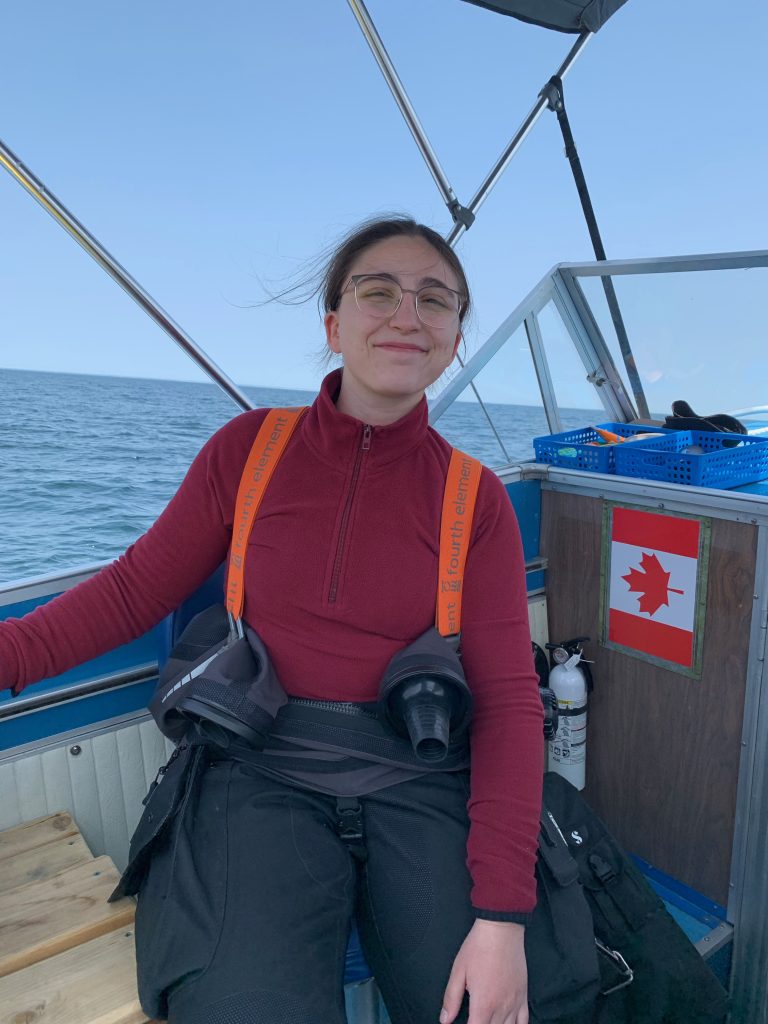
Charlotte Pilon-McCullough is a third-year student studying biochemistry at the University of Ottawa, where her focus has been on conserving aquatic environments. Last summer she worked with Parks Canada as a member of the Thousand Islands National Park Resource Conservation Team and had spent considerable time on Main Duck Island which we are planning to explore over the summer. She has also spent extended periods on small commercial boats and has been working in the scuba industry over the last nine years at Kanata Diving Supply as a Divemaster.
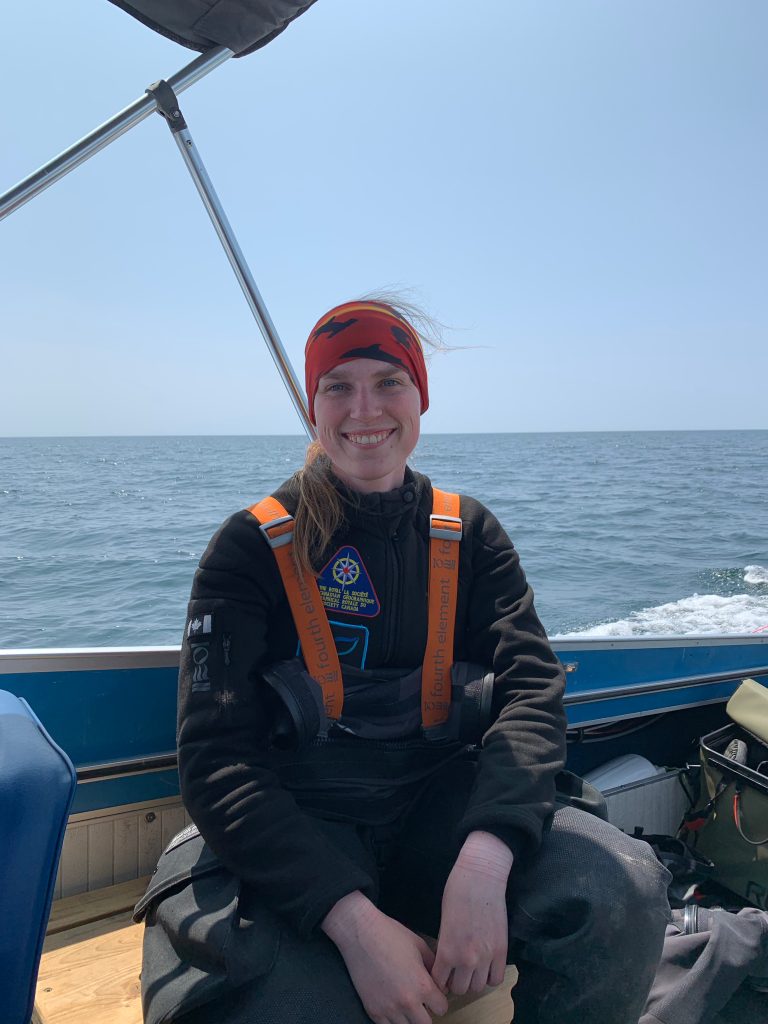
Jill Heinerth is the current Explorer-in-Residence for The Royal Canadian Geographical Society. More people have walked on the moon than visited many of the places that she has explored on Earth. From the most dangerous technical dives deep inside underwater caves to searching for never-before-seen ecosystems inside giant Antarctic icebergs, her curiosity and passion for our watery planet is the driving force of her life.
Achievements include the Governor General’s Polar Medal and being appointed a Fellow of the International Scuba Diving Hall of Fame. In addition, the Explorers Club has recognized her work with the prestigious William Beebe Award for ocean exploration.
Nearing the general area of the wreck, we slowed down and activated our sidescan sonar to begin our search. A few minutes later we almost fell out of our seats in shock as the wreck appeared on the sonar screen on our very first pass!
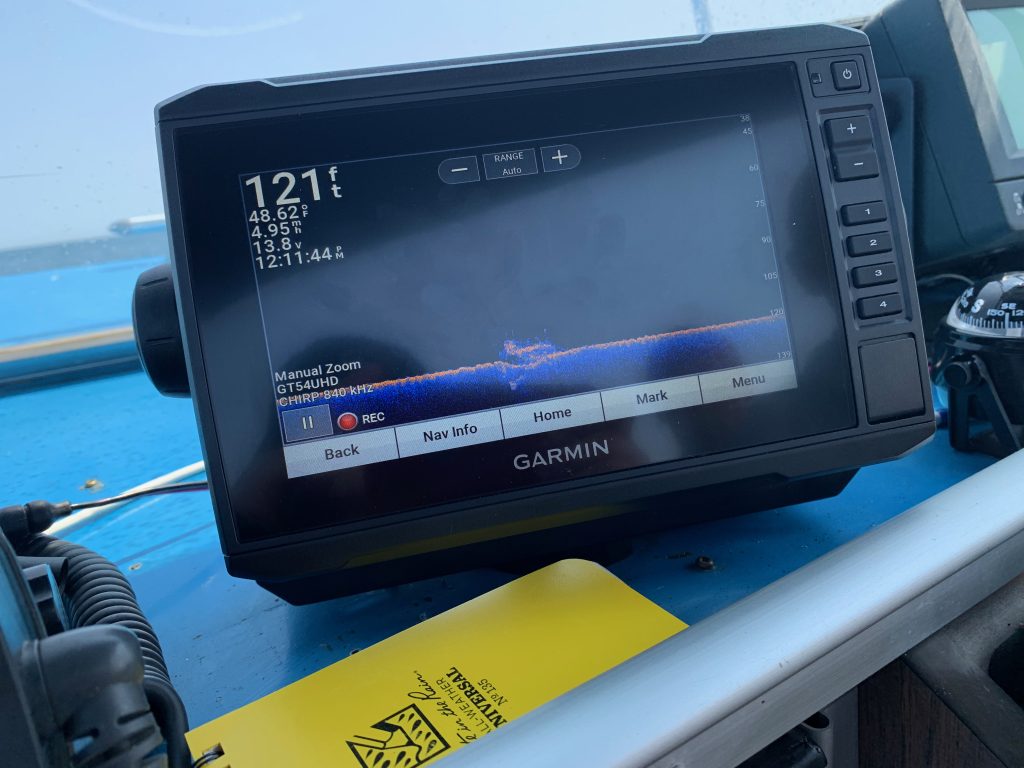
WOW, we had planned for several hours of searching, but thanks to the amazing coordinates that Tim Legate and Spencer Shoniker had provided us, it was now time to go diving.
After the cheers died down the next step was to mark the location with a shot line, so we circled back and deployed our first line successfully.
However, during the time that we spent gearing up to dive, the waves had moved the shotline away from the wreck since we did not put a heavy enough weight on it for the conditions.
We retrieved it and deployed it a second time with a heavier weight, but as it started to unroll the line jammed and the float was pulled under and never resurfaced.
As we prepared to deploy our backup shot line, our boat Captain drew our attention to the increasing size of the waves which were now starting to build close to two feet. He then made the call to end diving for the day. With a smaller boat and the fact that there was no proper mooring it was unsafe to continue diving. Even though we were all disappointed that we were not going to explore the OLIVER MOWAT today, the team agreed that it was the right call and that it would be better and safer to dive the next day.
With the sun still high in the sky, we decided it was time to follow in the footsteps of the Fabulous Four and venture to Main Duck Island.
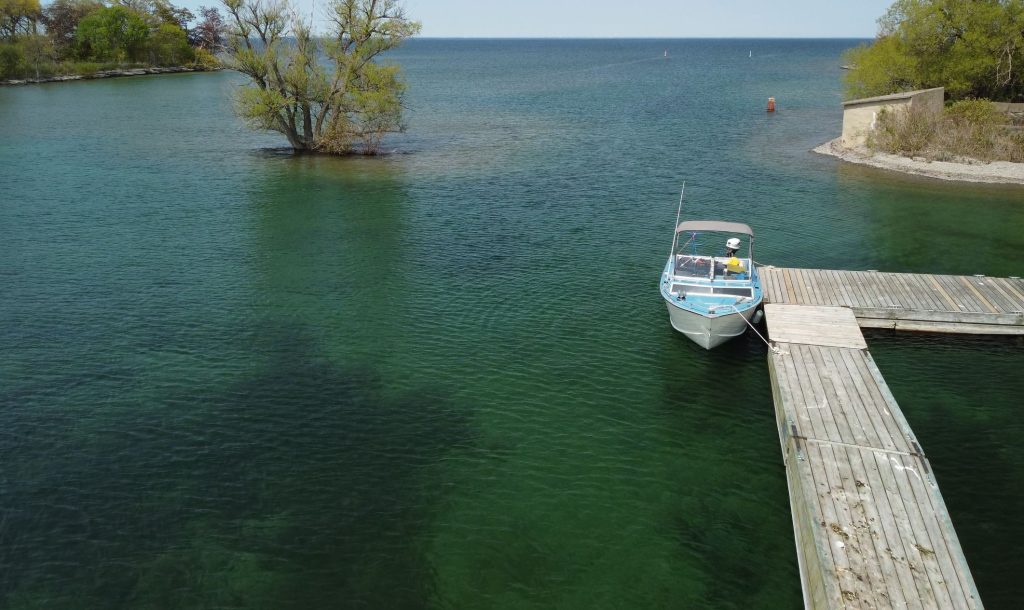
The island is a National Park and is famous for its unique population of snakes that have adapted to the environment in the middle of Lake Ontario. Over the years the snakes evolved to eat Round Gobies, an abundant invasive species in the area. Combined with a lack of predators they have developed gigantism and their numbers have swelled to the point that you meet a snake every few feet.
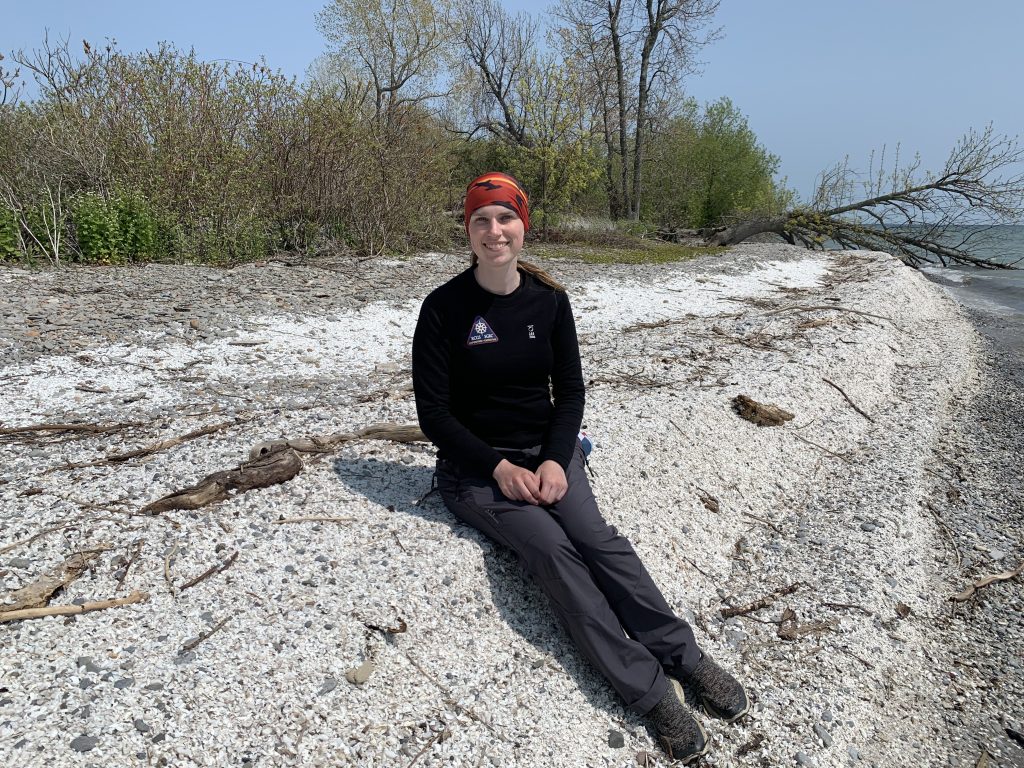
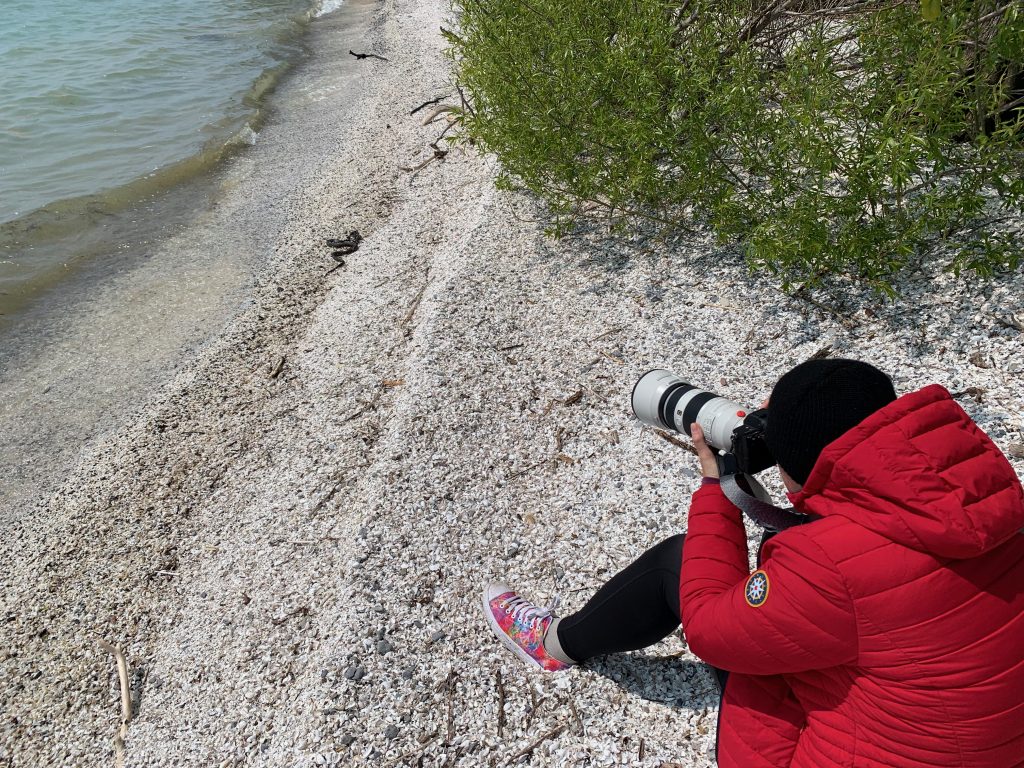
Hiking down the beach made up of broken and bleached Zebra Mussel shells (another invasive species), we had the unique opportunity to capture some awesome images of a large water snake dragging a Goby, which was almost the same size as the snake itself out of the surf and up to the tree line to slowly be eaten.
As we left the dock and started to follow the setting sun westward back to Point Edward our spirits were riding high from our island experiences which had replaced our disappointment at not exploring beneath the waves.


